

What age can a baby start swimming lessons
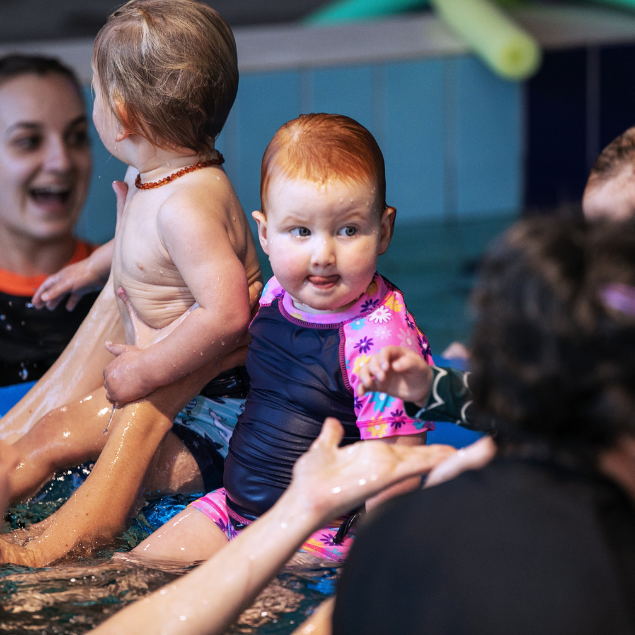
We take swimmers from three months of age. Our infant classes are Tadpole and Frog, and a parent, caregiver or family member is in the water for both.
At this stage, lessons are not really about swimming. They are about a baby getting used to the feel of water, the noise of a pool, and moving through it calmly. Those things sound small. They are what everything else is built on.
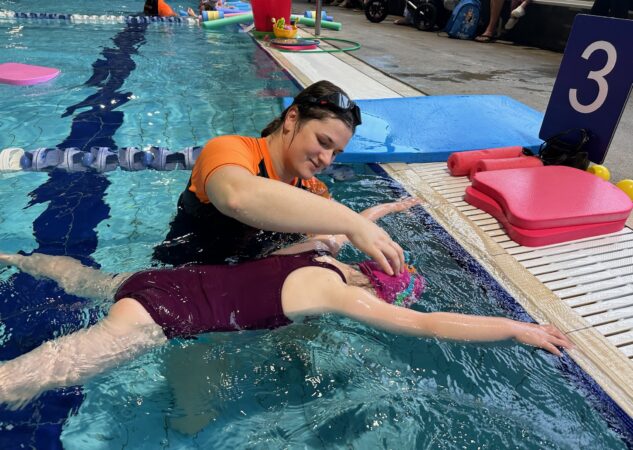
Part of it is for you too. You learn the holds we use, how to support your baby in the water, and how to read the cues that say they are ready to try something, or that they have had enough for now. Most parents find the second or third lesson feels very different from the first.
Our youngest level, Young Tadpoles, is for babies from three to six months. These lessons are free, and families usually get four lessons. Places are offered by waitlist, and your baby can go on the list once they turn three months old, so it is worth contacting your nearest center then.
When your child turns three, they move into a class without a caregiver in the water. All eight of our centers run the same classes, including the youngest levels.
What happens in a first swimming lesson
Lessons are 30 minutes long at every level, including the first one. For infants, you are in the water with your child the whole time, and the teacher works with a small group of parents and babies together.
Every teaching pool is indoors and heated to 32 degrees. Warm water keeps babies settled, which makes for a much better first lesson.
A first lesson usually involves holding, floating, gentle movement through the water, songs, and plenty of repetition. Nothing is rushed and nothing is forced.
Your baby will need to wear a swim nappy in the pool. If you forget one, we have them on hand at the center to buy.
Some children cry in their first few lessons. That is normal, and we expect it. Most settle within two or three visits once the routine becomes familiar.
Our infants programme sets out how the early levels work.
Why starting young helps
Starting early does help, though not for the reason people often assume. It is not that babies learn to swim. It is that they become comfortable.
A child who has been in and around water since infancy treats a pool as an ordinary place. Water on the face is not a surprise, so their attention can go on learning rather than on managing nerves. That comfort makes every skill that follows easier to teach.
In New Zealand, a lot of family life happens near water. Beaches, lakes, rivers and backyard pools are part of an ordinary summer, so being capable in the water is a practical skill rather than a nice extra.
Our lessons run year round rather than by school term. In the infant classes children move up with age, and teachers extend each child as they are ready. From there on, swimmers move up when the skill is solid rather than when a term ends.
Is my child too old to start swimming lessons
No. There is no age at which it becomes too late to learn to swim.
Some children start at four or five. Others start at seven, eight, or later again. None of them are behind, and none of them have missed their chance.
Older beginners often move quickly. They can follow an instruction, hold an idea from one week to the next, and tell a teacher what they find difficult. A child who starts later regularly draws level with children who began as babies.
If your child is three, four or five, preschool classes have a maximum of four children to one teacher, so a cautious starter gets plenty of attention. You can see the levels and what each one covers on our preschool programme page.
It holds for adults too. Our adult classes take complete beginners alongside swimmers who want to work on their technique, so a parent who never learned properly can start at the same centre their child does.
What should I look for in a swim school
We have taught swimming in New Zealand since 1973 and run eight centers across the North Island, so we have watched a lot of families make this decision. These are the questions worth asking wherever you visit.
How teachers are trained and supported. Ask who trains them, how often, and what happens when a teacher is away. Consistent teaching matters as much as good teaching.
Class sizes. Smaller groups mean more attention and more time actually doing something in the water. Ask for the maximum rather than the average.
How progression is decided. Some schools move children up at the end of a term. Others assess continually and move a child when the skill is solid. Ask which, and how you will be told.
Water temperature. Cold children do not learn well. Ask what the pool is heated to.
Whether lessons run year round. Long breaks cost skills. Ask whether classes continue through the holidays, and what happens if you miss a week.
Whether you can watch. You should be able to see the lesson and talk to someone afterwards about how it went.
Ask what the school prioritises early on. Distance is easy to measure, but technique is what makes swimming efficient and safe later. Our article on why body position and breathing matter in freestyle shows how we approach it.
Common questions from parents
How do the free Young Tadpoles lessons work?
Young Tadpoles is our level for babies aged three to six months. These lessons are free, and places are offered by waitlist only, so they are not always available straight away. Your baby can go on the list once they turn three months old. Families usually get four lessons. Contact your nearest center and the team will let you know when a place opens.
Do I need to be in the water with my child?
For Tadpole and Frog classes, yes. A parent, caregiver or family member is in the water with the child for the full 30 minute lesson. When your child turns three, they move into a class without a caregiver in the water, and you watch from poolside instead.
What if my child cries in their first lesson?
It happens often, and it does not mean anything has gone wrong. A pool is loud, bright and unfamiliar, and some children need a few visits before it feels ordinary. Most settle within two or three lessons once they know what to expect. Our teachers have seen it many times and work at your child’s pace.
How long are lessons, and how often should my child come?
Every lesson is 30 minutes, at every level. Most families come once a week. Because we run year round rather than by school term, your child keeps building on the week before instead of stopping and starting again. Weekly lessons give a child the best chance to hold onto what they learned last time.
Do lessons stop during the school holidays?
No. Our lessons run year round rather than by school terms, so classes continue through the holidays. If you are going away, talk to your center before you go. Long gaps are the main thing that slows progress, so where families can keep the routine going, children tend to hold onto what they have learned.
Come and see a lesson
The simplest way to know whether your child is ready is to watch a lesson. Find your nearest center and book a free trial lesson, and our team will help you find the right class for where your child is now.
Taught with care. Trusted for generations.
Hilton Brown Swimming. Lessons for Life.