

What’s happening beneath the surface
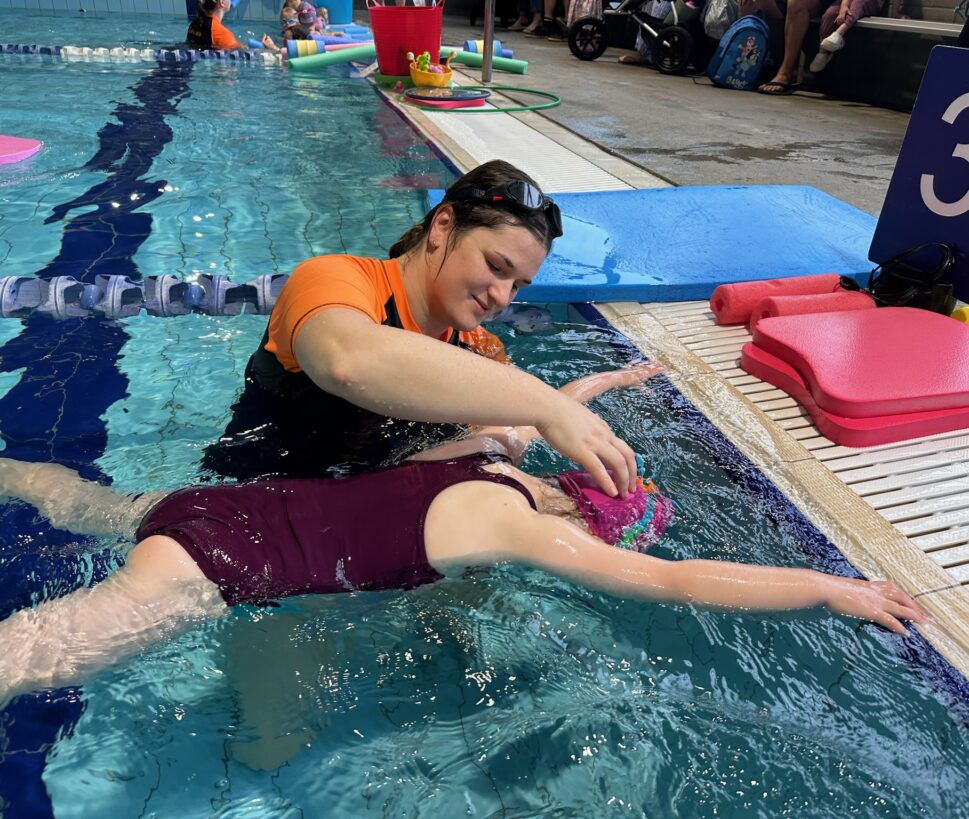
When it looks like your child is repeating the same skill, your instructor is usually working on something much more specific.
It might be head position during a breath. It might be whether the legs stay close to the surface under fatigue. It might be the timing between the kick and the arm pull, or how calm a child stays when they are asked to swim a little further than last week.
These are the details that turn a skill from “they got it once” into “they can do it every time, even when they are tired.”
Why progress is not always linear
Children do not all learn the same parts of swimming at the same pace.
One child might pick up body position quickly but take longer with breathing. Another might look confident early on, then slow down as the skills become more complex. Some children make quick gains at the start, then hit a quieter stretch once more coordination is required.
That is normal. Swimming asks a lot at once. Children are learning to listen, stay relaxed, move their body in an unfamiliar environment, manage breathing, and build confidence, often all in the same lesson. When one part is still developing, it can slow the next visible milestone.
Why we focus on technique, not just moving up
One of the biggest traps in learning to swim is mistaking speed of progression for real progress.
If a child moves ahead before the foundations are solid, gaps in body position, breathing, or coordination tend to show up later, and they are harder to fix once habits have formed.
That is why we teach technique first. Our Torpedo position, chin-on-chest cue, and “goggle in the water” when breathing are there because strong technique is what carries a child from Beginner through Breather and into the Stroke levels without hitting a wall.
So if a quieter stretch means your child is being given the time to lock those foundations in, that is usually a good thing.
What can slow progress down
There are also some very normal reasons progress can feel slower for a while. Missed lessons interrupt momentum, which is part of why we run year-round rather than by school terms. Confidence can dip, even in children who usually enjoy the water. Growth spurts can affect coordination. And some parts of swimming, especially breathing and combining several actions at once, simply take longer than others.
Some children also just need more repetition before a skill becomes automatic.
That is not a sign that anything is wrong. It is simply how learning works.
What parents can do to help
A few practical things make a real difference.
Keep lessons consistent. Regular lessons give your child the best chance to build on what they did the week before. Missed weeks are the single biggest thing that stretches a quieter phase out.
Celebrate the smaller wins. A child who is more settled in the water, more willing to try, or more responsive to their instructor is still making progress, even if they have not moved up a class.
Avoid comparisons. Children learn at different rates. Confidence, coordination, and maturity all shape progress as much as effort does.
Keep the tone positive. If your child senses you are worried about their progress, it can make lessons feel like a test. Calm encouragement goes a long way.
Talk to our team. Our supervisors and front-of-house team can tell you exactly what your child is working on and where they are improving. Often, once parents understand what is happening beneath the surface, the picture becomes much clearer.
Common questions from parents
How long can a swimming plateau last?
It varies. A few weeks is normal, particularly around more complex skills like breathing or coordinating the stroke and kick together. If a quieter stretch extends past a full term without any visible change, that is worth a conversation with our team.
Should I move my child to a different swim school?
Usually, no. Switching schools often resets progress, because each programme teaches slightly differently. Before changing anything, talk to our team about what is happening in lessons. Most of the time, a short chat clears it up.
Is it normal for children to go backwards in swimming?
Yes, especially after school holidays, illness, or a growth spurt. Skills are usually not lost, they just need reactivating. Most children regain the lost ground within a few lessons of returning.
Should I give my child extra practice at home?
Extra water time is great for confidence and enjoyment. We would not recommend trying to coach technique at home though, because well-meant cues can sometimes conflict with what we are teaching in lessons. Play, float, and have fun. Leave the technique to us.
My child seems bored. Is that a sign they should move up?
Not necessarily. Sometimes boredom is a sign a skill has become easy enough that the next one is ready to be introduced. Sometimes it is just a tired week. Mention it to our team and we will check in with their instructor.
What to remember
A plateau is often not a sign that nothing is happening. More often, it is the stage where the important foundations are settling in.
With consistency, patience, and quality teaching, children do keep moving forward. Not always quickly, and not always in a straight line, but in a way that builds real confidence and capability over time.
If you would like to chat about your child’s progress or find the right class for where they are now, get in touch with your nearest Hilton Brown Swimming centre. Our team has guided generations of New Zealand families through exactly this stage, and we are always happy to help.