

Why the end of winter sport is a useful moment
The gap in the week is real, and it does not tend to stay open for long. Something always fills it. School events, summer sport, birthday parties, or just the general busyness of family life.
Summer in New Zealand also arrives faster than it feels in August. Between now and the first properly warm weekends there are roughly three months.
In that time, many children go from occasional contact with water to being around it regularly, at the beach, at the bach, at birthday parties, on holiday and around pools.
Starting now means they have time to build before all of that begins.
And from a practical point of view, choosing a lesson time now, while that winter sport slot is genuinely free, is often a lot easier than trying to find one later in the year.
What three months of swimming lessons can build
We are not going to tell you that twelve weekly lessons turn a beginner into a strong swimmer. They do not. But three months of consistent lessons can still make a real difference.
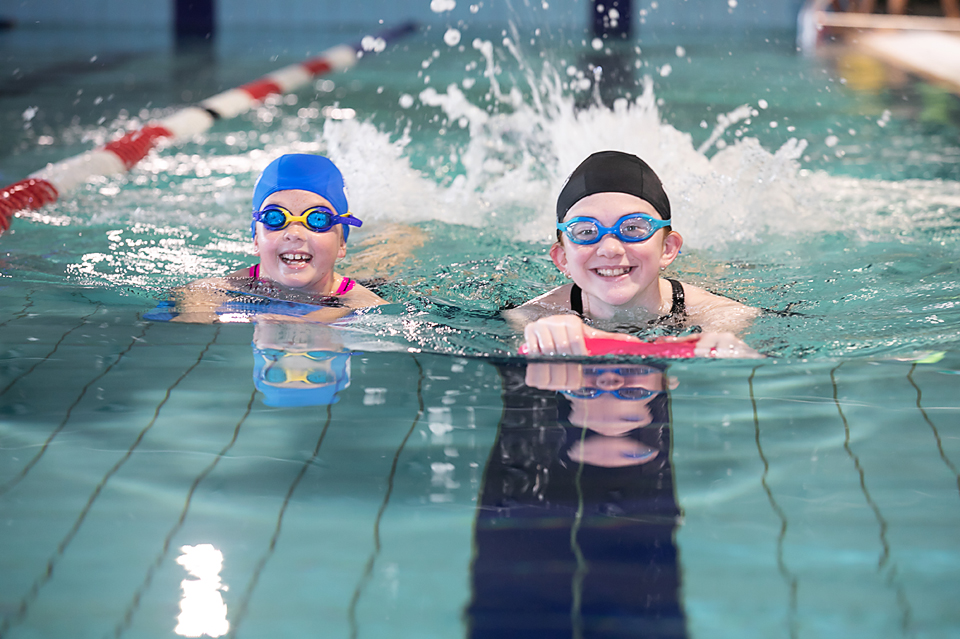
A child who starts now may become more settled getting into the water, more comfortable putting their face under, more capable of moving themselves a short distance, and more confident taking a breath without losing their composure.
A child who already has some swimming behind them may be able to build on those skills and make solid progress before summer. The important thing is consistency.
Swimming skills need repetition. Children learn something, practise it, come back to it, and gradually begin to use it more confidently and more independently.
Holiday programmes can be a great way to give children extra time in the water, but they work best as part of a bigger picture. Regular weekly lessons give children the chance to keep revisiting and building those skills over time.
If your child stopped for winter sport
Plenty of families pause swimming lessons when winter sport starts. There is only so much room in a week, and sometimes something has to give. We have written before about where swimming sits alongside winter sport, but the practical point now is simple: the season has ended and the slot is free.
If that was your family, the reassuring part is that children do not usually lose everything they have learned.
More often, the skills have gone a little quiet.
Most children need some time to get back into the rhythm of lessons and reactivate what they already know, rather than learning it all again from the beginning. Often, teachers start to see those familiar skills return within the first few lessons.
When a child comes back after a break, they return to the class they were last enrolled in and their teacher works out from there where they are now.
If something needs a little refreshing, that can happen in a class and at a level they already know, which is usually a comfortable place to start again.
We have written more about this in our article on why your child’s swimming progress can feel slow.
If your child has never had lessons
If your child has never had formal swimming lessons, or has not had them since they were very young, the concern is often about timing.
Are they too old? Is it too late? Are they going to be behind everyone else?
There is no age at which the door closes.
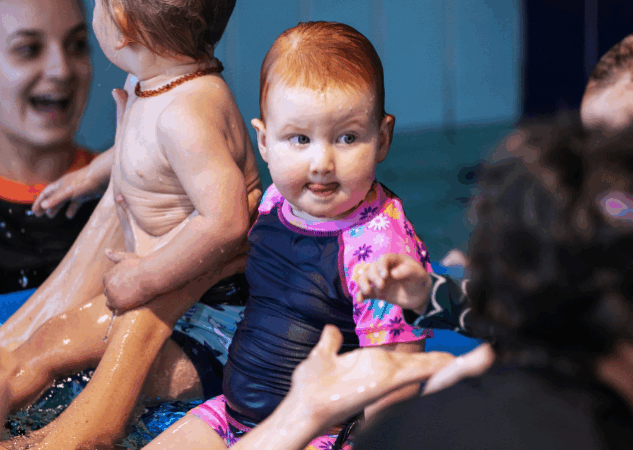
We teach babies from three months old, we teach adults, and we teach everyone in between. A ten-year-old starting from the beginning is not unusual, and they will not be the only one.
The practical side is straightforward too.
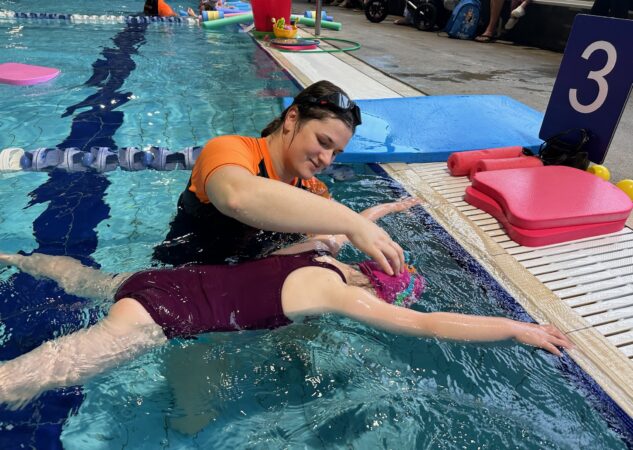
Most lessons run for 30 minutes, with higher stroke levels moving to 45 or 60 minutes as swimmers build distance and endurance. Preschool classes have a maximum of four children per teacher.
Our pools are heated indoors to 32 degrees, so a cold spring evening makes very little difference once your child is in the water.
And because our lessons run all year rather than by school term, you do not need to wait for a new term to begin. You can start in any week where there is a space in the right class.
If you have a younger sibling coming through too, our article on when to start swimming lessons is a useful place to begin.
What to look for when you are choosing swimming lessons
This is worth saying plainly, even if you end up somewhere other than us.
There are a few things worth asking about wherever you enrol.
Consistency of teaching
Teachers move around, and every swim school has to manage that. What matters is whether your child hears the same cues and follows the same progression, whoever is teaching them that week.
How progress is tracked and shared
You should be able to find out what your child is working on and where they are improving without having to guess from the poolside.
Whether lessons run year round
Swimming is a skill that develops through regular practice. Programmes that stop with school terms build in repeated breaks, while year-round lessons allow children to keep building momentum.
How confidence and capability are developed together
Confidence matters enormously, especially for younger swimmers. But confidence on its own is not the same as swimming ability.
A child can be completely happy in the water and still not have the skills to manage well when things become harder. That difference often becomes much more obvious in summer, when children find themselves in water that may be deeper, colder or less predictable than a lesson pool.
We have been teaching New Zealand children since 1973, and one thing has stayed very clear over that time. Enjoying the water matters, but being able to manage yourself in it matters too.
Common questions from parents
Is it too late to start swimming lessons before summer?
No. A few months of regular lessons before summer can make a meaningful difference. Starting now gives your child time to build skills and confidence before they are spending more time around water.
How long does it take for a child to learn to swim?
It varies a great deal. Age, previous experience, confidence, attendance and how consistently a child practises all play a part.
Most children build genuine swimming capability over a period of years rather than weeks. That is why regular attendance matters more than any single block of lessons.
Will my child have gone backwards after a break?
Usually, less than parents expect. Skills often need reactivating rather than rebuilding from scratch. Most children settle back into the routine and begin reconnecting with what they already knew within the first few lessons.
Can we start mid-term?
Yes. Our lessons run year round rather than in school terms, so you can start in any week where there is a space in the right class.
Is my child too old to start?
No. We teach children and adults, and older beginners often adapt quickly because they can follow instructions, understand what they are being asked to do and apply feedback more deliberately.
Where to from here?
The gap in your week may not stay open for long, and summer will be here sooner than it feels in August.
If your child has not swum with us before, you can book a free trial lesson at your nearest Hilton Brown Swimming centre.
Free trials are available for families new to Hilton Brown Swimming, or for anyone who has not swum with us for a year or more.
Your child gets a proper lesson, you get a clear idea of where they are at, and there is nothing to commit to afterwards.
You can find your closest centre here.
If your child has swum with us before and paused for winter sport, get in touch with your nearest facility about coming back. Our team can find you a suitable space and help you get started again.
And if your family is already swimming with us and you would like to know how your child is progressing, have a chat with one of our deck supervisors or the Front of House team at your facility.
They can tell you what your child is working on, where they are improving, and what comes next.
You can also check their current level and progress in your Customer Portal.
Taught with care. Trusted for generations.
Hilton Brown Swimming. Lessons for Life.