

The numbers we should know
Water Safety New Zealand reports that 7 out of 10 Kiwi kids can’t swim well enough to save themselves. In a nation where being in and around water is part of who we are, that’s a number that should make every parent pause.
Drowning remains one of the leading causes of preventable death for New Zealand children. The good news is that competent swimmers are dramatically safer in the water. The harder truth is that competent swimming doesn’t happen by accident.
Why swimming takes time to learn
Swimming is what’s known as a gross motor skill. It’s a whole-body action involving breathing, balance, coordination and stamina, all working together. Like walking and talking, it takes time, repetition and proper teaching to develop.
The difference is that we don’t leave walking and talking to chance. We talk to our babies constantly. We hold their hands as they take their first steps. We celebrate every milestone. Yet swimming, arguably the most important physical skill a child can learn in New Zealand, is often treated as optional or left until later.
It doesn’t have to be.
The case for starting early
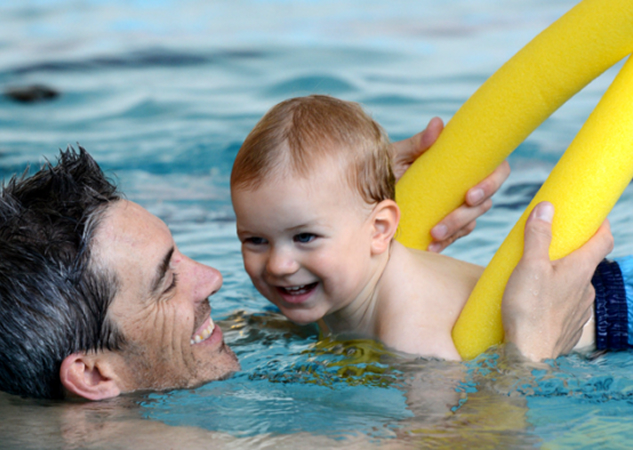
A landmark study from Griffith University in Australia, led by Professor Robyn Jorgensen, surveyed thousands of families and tracked the development of children under five. The findings were striking. Children who participated in regular swimming lessons from a young age showed advantages not just in physical development, but in cognitive, language and social skills as well.
The children in the study reached developmental milestones earlier than the wider population. They scored higher in measures of self-confidence, independence and the ability to follow instructions. Some of the differences in language and numeracy were significant.
The researchers were clear that swimming itself wasn’t the only factor at play, parental involvement and the structured nature of lessons matter too. But the evidence for starting young is genuinely compelling. The water is one of the few environments where a child can develop physically, socially and cognitively all at once.
What good teaching looks like
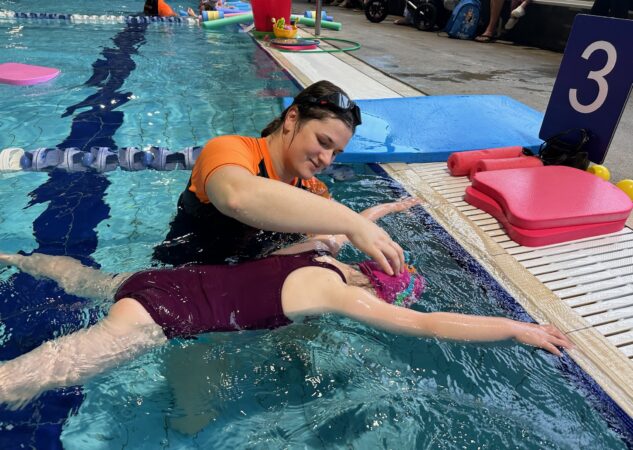
After 50 years of teaching New Zealanders to swim, we’ve learned a few things about what actually works.
Children learn best when they’re at the right level, not too easy, not too hard. Confidence builds slowly and breaks quickly, so the environment matters: warm, calm, supportive, with instructors who genuinely understand how a 4-year-old’s brain works compared to a 10-year-old’s.
Progress isn’t linear. A swimmer might pick up a new skill in a single lesson, then spend weeks consolidating it before they’re ready for the next step. That’s not a problem to be fixed, that’s how learning works. The job of a good swim school is to recognise where a swimmer is, teach to that, and move them on when they’re genuinely ready.
Our benchmark at Hilton Brown Swimming is 200 metres with correct stroke and breathing technique. Not because every child needs to be a competitive swimmer, but because that’s the level at which a swimmer can genuinely look after themselves in the water. It’s the level at which swimming becomes a life skill, not just an activity.
The bottom line
If you take one thing from this piece, let it be this: swimming is one of the most important things you can teach a child in New Zealand. The earlier you start, the better. The right teaching, at the right pace, in the right environment, makes all the difference.
We’d love to help. But more than anything, we’d love every child in this country to grow up safe, confident and capable in the water, whoever teaches them.
It’s why we do what we do.
Taught with care. Trusted for generations.